SEASONS OF FUTURISM, FROM ATELIER BALLA TO "PLACES OF FUTURISM"
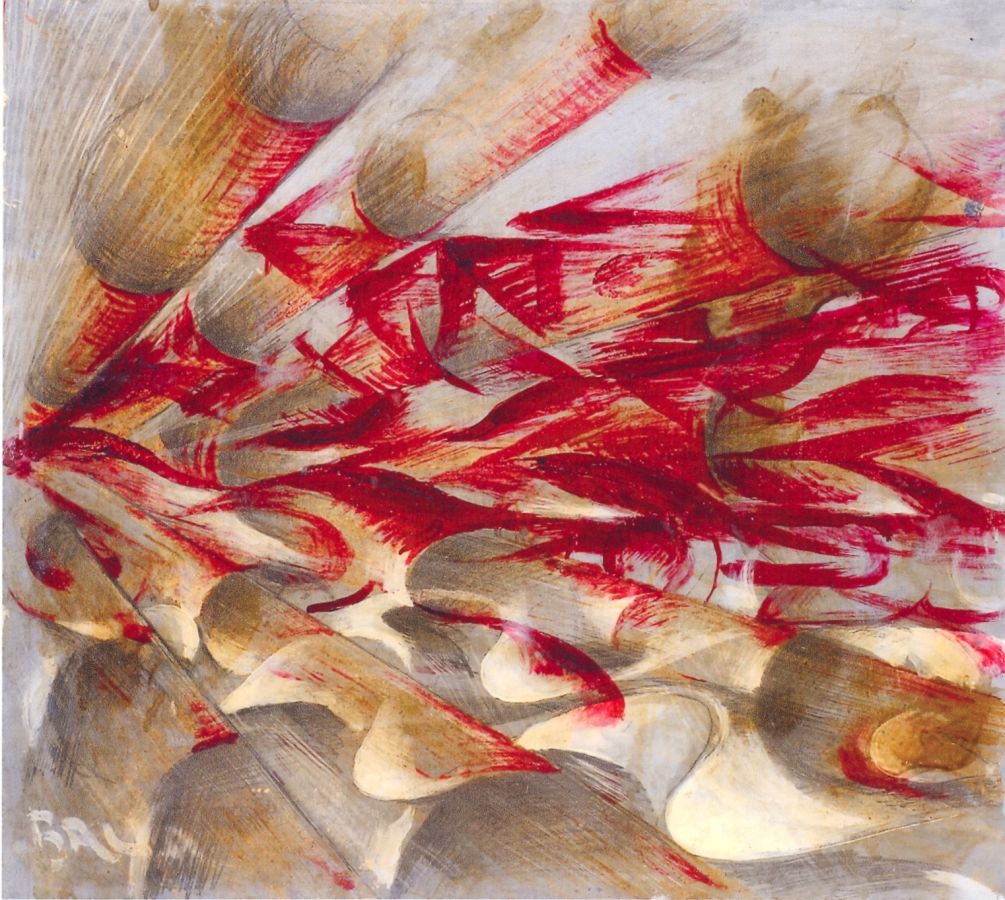
In the uninterrupted and widespread futurist revival, which began with Futurism & Futurisms of Palazzo Grassi in Venice in 1986, fueled by dozens of reviews and personal exhibitions in Italy and abroad, which have deepened that movement at different levels of analysis, a revival in reality started even earlier, but at spectacular levels, more of a research than of an event, as in the case of Futurist Reconstruction of the Universe in 1980 at the Mole Antoneliana in Turin, curated by Enrico Crispolti, presenting yet another Futurist exhibition may seem pleonastic and manner. It is not, however, for the Arte Centro gallery that futurism and the futurists have always exhibited, even when some authors were unknown to most.
And we are not referring only to the so-called second futurists and to the epigones, but also to painters and sculptors already active in the Marinettian movement in the early 1910s, today highly sought after, for having only recently been the object of in-depth study and in the end relocated to the right historiographic dimension. .
I remember in 1970 large canvases by Prampolini hanging in the perched space of via Brera, snubbed by collectors, now in museums, or fantastic metal sculptures by Regina, an artist still little appreciated, and again the incredible aeropaintings of Dottori and those of Andreoni.
But those years, the gallery also exhibited Balla, Severini, Depero, to the enthusiasm of a few enthusiasts.
Palazzo Grassi has the merit of launching a great discourse on Futurism as an artistic event that can be enjoyed by a mass audience.
But in that review it proved to be lacking certainly not in masterpieces, but in historical-critical analysis, and therefore incomplete, which provoked the reaction of scholars and researchers, those who had progressively broken a sort of wall built by some critics and historians of the art, starting from the fifties on a vision of futurism all centered on Boccioni, on painting, on Milanese futurism, therefore on the heroic season that they believed had ended with the death in 1916 of Boccioni and Sant'Elia, judging all subsequent developments by-products, moreover linked to the fascist culture.
04.03.2022
And we are not referring only to the so-called second futurists and to the epigones, but also to painters and sculptors already active in the Marinettian movement in the early 1910s, today highly sought after, for having only recently been the object of in-depth study and in the end relocated to the right historiographic dimension. .
I remember in 1970 large canvases by Prampolini hanging in the perched space of via Brera, snubbed by collectors, now in museums, or fantastic metal sculptures by Regina, an artist still little appreciated, and again the incredible aeropaintings of Dottori and those of Andreoni.
But those years, the gallery also exhibited Balla, Severini, Depero, to the enthusiasm of a few enthusiasts.
Palazzo Grassi has the merit of launching a great discourse on Futurism as an artistic event that can be enjoyed by a mass audience.
But in that review it proved to be lacking certainly not in masterpieces, but in historical-critical analysis, and therefore incomplete, which provoked the reaction of scholars and researchers, those who had progressively broken a sort of wall built by some critics and historians of the art, starting from the fifties on a vision of futurism all centered on Boccioni, on painting, on Milanese futurism, therefore on the heroic season that they believed had ended with the death in 1916 of Boccioni and Sant'Elia, judging all subsequent developments by-products, moreover linked to the fascist culture.
04.03.2022